The Impact of Space on Society: Cultural Aspects, 16-19 March 2005, Budapest
The Impact of Space on Society: Cultural Aspects
First IAA International Conference: Impact of Space on Society
and
8th Leonardo/Olats Space and the Arts Workshop
Budapest March 16-19 2005
The Workshop takes place at Millenaris
http://www.congrex.nl/05c04/
http://www.impactofspace.hu
Presentation
In collaboration with the First IAA International Conference: The Impact of Space on Society that will take place March 17-19 2005 in Budapest, Leonardo/Olats is holding its 8th Space and the Arts Workshop on March 16th 2005 on the theme of "The Impact of Space on Society: Cultural Aspects". The workshop is hosted by Millenaris.
Under the sub-theme of "Art and literature, science fiction, cultural aspects of space activities", the selected participants to the Conference form the core group of the Leonardo/Olats Space and the Arts Workshop.
Attention : there is a registration fee to the Conference (200 Euros for early birds ; 250 Euros after).
Proposal and registration is to be done via the following web site : http://www.congrex.nl/05c04/
Deadline for abstract submission : October 23rd
The Impact of Space on Society
What is the role and place of the artists today ?
We are seeking presentations from artists, writers and other cultural professionals that address the role of the artist in the context of societal and cultural aspects of space activities from a future oriented perspective.
Timetable
The arts have been an integral part of space exploration and space activities since the beginnings. Over the years artists, writers and film-makers have captured the imaginations of their generations gradually making the idea of space exploration an exciting and integral part of our society's shared aspirations which in turn has helped generating public support and enthusiasm for the civilian space initiatives.
23rd October 2004 : Deadline for abstracts 10th December 2004 : Notification of acceptance 16-19 March 2005 : Workshop and conference
Organization
There is a registration fee to the Conference. All participants to the workshop are also to present to the Conference. Submitting an abstrat implies the committment to take part in both events.
Travel and accommodation expenses are the responsibility of each participant.
Committees
"Arts and Space" Selecting CommitteeConference International Program Committee
Background of the Leonardo/Olats Space and the Arts Workshop
Under the title "Rencontres du 13 avril" a series of small, one-day Workshops on Space and the Arts was co-organized by Leonardo/Olats, the OURS Foundation and the International Academy for Astronautics between the years 1997 and 2002. Held in Boulogne-Billancourt, a suburb near Paris, these workshops attracted leading space scientists, engineers and artists on specific themes chosen to generate exchanges between artists and scientists concerning the cultural impact of space activities.
Since 2004, the workshop has become nomadic and is held in different countries in partnership with other organizations.
The different topics of the past seven workshops have been:
1997 April 13th - "The Artists as Space Explorers"
1998 March 25th - "Space Art / Earth Art"
1999 March 21st - "Cultural Perspectives on Space"
2000 March 26th - "Life in Space"
2001 March 25th - "Outer Space - Cyber Space"
2002 March 17th -"The Collaborative Process in Space Art"
2004 May 18-21 - "Space: Science, Technology and the Arts", in partnership with
ESTEC
The documentation about each past workshop is online on the Leonardo/Olats web site at http://www.olats.org
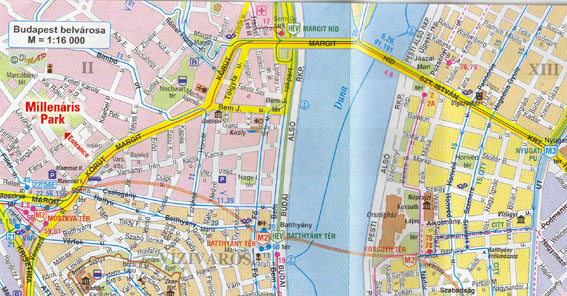
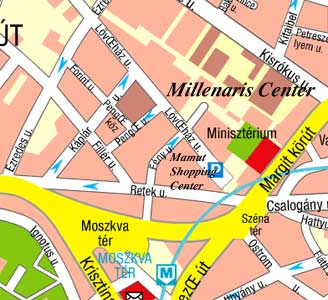
How to reach Millenaris
Lövo"ház u. 39
1024 Budapest
The entrance is at Fény u. 20-22
The workshop will be at building D, at the auditorium.
Subway station and Tram station
Moszkva tér or Széna tér
How to go from the subway station to Millenaris :
Take street Fény, and after the shopping Mall, you continue across the
Lövöház street untill you see the Millenaris Park.
It is a 5 minute walk from the subway station to Millenaris
Morning : Open Session :
11h00 – 11h15 : Coffee Break
13h00 – 14h30 : Lunch Break
Afternoon : Closed Session :
15h40 – 15h55 : Coffee Break
Evening : Open Session :
Participants
Biography: Ivan Almar DSc, professor of astronomy.
Born in 1932, Budapest, Hungary. My father was an architect and painter, my mother a piano teacher and pianist.
After studying at L. Eotvos University in Budapest I worked as an astronomer in Konkoly Observatory, Budapest. Started space research already in 1957 by tracking optically artificial satellites. Later organized the Satellite Geodetic Observatory in Penc and also the first center of satellite remote sensing. Now I am Chairman of the Space Research Council of Hungary. Member of IAA since 1980, former co-chair of its SETI Committee and chairman of its Terminology Study Group, now I am chairman of Commission 6 (Space and Society: Education and Culture).
Contribution: What Kind of Impact has Space on Arts?
Abstract:
Matha Blassnigg
Biography: MARTHA BLASSNIGG is currently a PhD student with MetaTechnology Research, in the School of Art, Media and Design at the University of Wales Newport.
Her original interests in fine arts, music, dance, photography and philosophy have converged in studying and working with film in the areas film theory, documentary, projection and restoration. In her Masters thesis of the University of Amsterdam Seeing Angels and the Spiritual in
Film: An Interdisciplinary Study of a Sensuous Experience for the studies of Film-theory and Cultural Anthropology she has compared cinema technology with the metaphysical phenomenon of appearances. Her documentary film Shapes of Light, 2000, which was part of her thesis, presents four Austrian artists who express their belief in angels and mediate their own clairvoyant sensitivity in their artwork. In her latest documentary film, Lotte Hahn, 2004, a portrait of her grandmother’s artistic and personal life, she treats the subject of memory in its relation to time and space. The film reflects fragmented and discontinuous remembrances of her past. At several points the flow of the narrative is ruptured in order to reflect upon the way the medium film can express the transience and complexity that underlies the working of our consciousness in our interaction with history. Before joining MetaTechnology research she worked as filmrestaurer in the Netherlands Filmmuseum in Amsterdam and subsequently in the Computer Software sector.
The interrelations of metaphysical themes with aspects of technology, in particular cinema and photography, are brought together in her Ph.D project at MetaTechnology Research. Drawing on evidence of claims for human extensions into other dimensions, such as in the way technology is said to provide a gateway to spirituality, the thesis examines how the historically determined concept of the angel becomes connected to the popular use of photographic and cinematographic technology. The aim of the thesis is to make a contribution to the way we think about the spiritual and metaphysical implications of contemporary technology and its popular interpretation.
Contribution: "Towards an Anthropology of Space"
Abstract:
Text of the proceedings : in english
Annick Bureaud
Biography: Director Leonardo/Olats
Contribution:
Abstract:
Nina Czegledy
Biography: President ISEA
Contribution:
Abstract:
Gyula Julius
Biography: Millenaris
Contribution:
Abstract:
Roger Malina
Biography: President Leonardo
Contribution:
Abstract:
Ariane Maugery
Biography: Ariane Maugery was born in Marseilles, France, in 1979. She studied visual arts at the Université de Provence in Aix en Provence and graduated in 2000. In 2001, she got a "Diplôme d'Etudes Approfondies" in Aesthetics with her diploma, Vertigo towards deterministic chaos. Currently, she is a third year Phd student in Visual Arts and Art's Science. Along with these post-graduate studies, she has her own practice has an artist in visual arts with strong emphasis on video, sound and special interests at the interface between art and science. In 2004-2005, she is the director of a workshop at the Ecole Supérieure des Beaux-Arts de Marseille. Following the attribution of the Fearless Medi@terranée Prize in 2003, she was in fact in residency there to create Internal Friction, a video, which is the first phase of a video-installation, Ultra-relativistic e-motion, with a dancing movement. This video-installation has been selected by the Ballet Preljocaj and the French Physical Society in the context of the World (or Einstein) Year of Physics under the aegis of UNO and UNESCO for the inauguration (June 2005) of the Centre Chorégraphique National de la Région Provence-Alpes-Côte d'Azur in Aix en Provence. Ariane Maugery who created her first performance, Cathédrales liquides in 2000, is the author of a dozen of videos; she has participated in several video festivals, exhibitions and conferences. (http://chaosmos.free.fr)
Contribution: "Microgravity Oddity"
Abstract:
Text of the proceedings : in english
Ioannis MICHALOU(di)S
Biography: Dr. Ioannis MICHALOU(di)S had received his Ph.D in Visual Arts at the University of Paris I, Panthéon-Sorbonne in 1998. His artistic work till then was caracterized by the use of elastic fabric in site specific installations (in situ), envirommental art and public art projects. With his work he had participaterd in a lot of exhibitions and conferences around the world. In 2001 he had received the Fulbright Award in order to achieve a post-doc research titled ‘’(IM)material Sculpture’’ at the Center for Advanced Visual Studies of Massachusetts Institute of Technology. A collaboration with scientists and industries around the world was launched for the aer( )sculpture project, an Art&Science pilot research concerning the creation of sculptures using novel aerogel materials, which are the lightest solids in the world and have the appearance of frozen smoke, see
http://www.jpl.nasa.gov/stardust/photo/aerogel.html
The first ever made silica aerogel sculpture «- Icare, I care...» was presented during the Sky Art Conference 2002, 15-20 October 2002, Delphi and Icaria, Greece, EU. Since then the project was presented at the 7th International Symposium on Aerogels, November 2-5, 2003, Alexandria, Virginia, USA, and the 7th ESG Conference on Glass Science & Technology, April 25-28, 2004, Athens Greece, EU. We’ll mention three articles on the project: I) “Aer( )sculpture: the enigmatic beauty of aerogel’s non-entity in a pilot art & science project”, Journal of Non-Crystalline Solids, Volume 350, 15 December 2004, Pages 61-6II) "BT" Japanese Art Magazine 9/2003, Vol 55, No 839, pp. 200-201, special section "ScienceHead", article by Ms. Fumio Iwamoto, III) “Sculpting…air” in http://www.solgel.com/articles/dec02/aeroart.asp
Contribution: "aer()sculpture"
Abstract:
I. Lightweight, strong, and with many special properties for the modern Science era, a product of Space acivities (cf. «Stardust Project», NASA’s Jet Propulsion Laboratory), aerogels are unique materials: both their pores and particles are smaller than the wavelength of light.
II. The silica aerogel is blue for the same reason the sky is blue: Rayleigh scattering. So, if you keep a piece of silica aerogel in your hand, it is as though you have a piece of sky in between your fingers!
III. The silica aerogel has no definite geometrical form! We can say that the space of Silica Aerogel is a personification of what the French mathematicien Henri Poincaré named a "representative space" [1], a space that you cannot measure, you just live in with all your senses. This vaporous and fragile substance breaks the conventional boundaries of the euclidean space...When a spectator looks at a sculpture made of silica aerogel, he thinks that it is not a 3-D object but a gas, a projection, an hologram...However, this nebulous mass is there: like a memory, like a dream, like an illusion... The next reaction of the spectator is to touch this immaterial and for that ‘’noli me tangere’’ sculpture made of 99% pure air! Therefore, the title of this research has the name of aer( )sculpture read as erosculpture.
[1] Arthur Miller, Einstein-Picasso: Space,Time and the Beauty that causes Havoc, (2001), transl. in Greek S.Pierris, edit.P.Travlos, Athens 2002, pp.175-234.
Text of the proceedings : in english
Attila Nemeth
Biography: Attila Németh is a part time translator, editor and journalist. He began translating stories and novels fifteen years ago, then became associate editor at Galaktika SF Magazine. He worked as a journalist for other periodicals on the side, and after Galaktika folded in 1995 he founded his own publishing house.
He contributed to the publishing of more than 50 novels, short story collections and other kinds of books. For two and a half years he edited Átjáró SF&F, a fresh new magazine trying to get a foothold on the Hungarian market.
Then came the rebirth of Galaktika, and the owners approached him to handle the magazine's literary contents. So now he is literary editor of the new Galaktika, now at its 4th issue.
From time to time he is participating in Eötvös Loránd University's science fiction seminar, and two years ago he was asked by EURISY to present his views on SF and scientific education in Hungary, at their Vienna conference.
Contribution: "Putting the Science in Fiction (Vernian Traditions in 20th Century Hungarian SF)"
Abstract:
Text of the proceedings : in english
Contribution: "The New Art Education on Environment of Microgravity"
Abstract:
Text of the proceedings : in english
Contribution: The Art and Science Relations as viewed from the C3 activities
Abstract:
C3: Center for Culture & Communication Foundation is not for profit institution, a space for innovative experiments and developments, its main focus the fostering of meetings and cooperation among spheres of art, science and technology.
Main objectives:
To provide space and opportunity for open information exchange and to make the results of these accessible to the general public.
Exhibitions organized by C3
The Butterfly Effect (1996), Budapest, M csarnok, http://www.c3.hu/scca/butterfly/index.html
C3 gallery: http://www.c3.hu/galeria/index.php3
To support artistic and interdisciplinary projects of a high standard.
To expound, interpret and distribute the positive examples established with the initiatives of large-scale events, exhibitions and conferences, traditional and electronic publications, research reports, bulletins and periodicals, via their publication in various media, as well as specialist documentation, and the maintenance of an archive and media library.
Perspective (1999), Budapest, M csarnok, http://www.c3.hu/perspektiva/ Media Model (2000), Budapest, M csarnok, http://www.mediamodell.c3.hu/
2001: science+fiction, Budapest, Trafó http://2001.c3.hu/ Vision – Image and Perception (2002), Budapest, M csarnok, http://vision.c3.hu/ Aura (2003), Budapest, Millenáris, http://aura.c3.hu
C3 events: http://www.c3.hu/events/index-hu.html
C3 publications. http://www.c3.hu/c3/publications/ C3 collection: http://www.c3.hu/collection/index_en.php
C3 on-line art magazine: http://exindex.c3.hu/ C3 services: http://freemail.hu, http://domreg.c3.hu/
Virgiliu Pop
Biography: Virgiliu POP, LL.Lc, LL.M, is a specialist in space law and policy, currently writing-up his doctoral thesis on space property rights at Glasgow University.
His research was published in Space Policy and various conference proceedings, and his expertise was sought by mass media such as New Scientist and BBC. He is a member of the International Institute for Space Law, and maintains a strong interest in the relationship between religion and space exploration. Virgil is the national point of contact for Romania in the Space Generation Advisory Council, having attended UNISPACE III.
http://virgiliupop.tripod.com
Contribution: "Space Exploration and Sacred Art"
Abstract:
Text of the proceedings : in english
David Raitt
Biography: Dr David Raitt has worked for the European Space Agency since 1969 in France and Italy, as well as The Netherlands, in a variety of positions.
He is now Senior Technology Transfer Officer in the European Space Agency’s Technology Transfer and Promotion Office in The Netherlands where his activities involve identifying and researching new breakthrough technological opportunities to ascertain their subsequent spin-off/spin-in possibilities in new markets. He is also charged with making the general public more aware of space technologies and concepts and the benefits in every day life that can result from technology spin-off. He is also involved in space art, culture, design, and educational activities, as well as projects relating to biomimetics, space elevators and materials, amongst others. One particularly noteworthy study that he initiated and managed related to innovative technologies from science fiction for space applications. Essentially this study sought to ascertain whether science fiction literature, arts and films contained concepts or technologies which had been overlooked and which now might be possible to achieve with today’s scientific and technical advances. The work generated much press and public interest and has fostered several follow-on activities. Dr Raitt is a Fellow of the Royal Astronomical Society and a Corresponding Member of the International Academy of Astronautics.
Contribution: Cultural and Artistic Events in Space: ESA's Perspectives
Abstract:
Text of the proceedings : in english
Jean-Luc Soret
Biography: Space Art One
Contribution:
Abstract:
Kara Szathmary
Biography: IAAA President and Chairman of the Board
Kara Szathmary was born in 1946 in the Hartz Mountains of West Germany, of Hungarian parents, who immigrated to Canada in June 1951.
He holds a Major Bachelor of Science degree in Physics and Mathematics from McMaster University (1970), a Master of Science degree in Astrophysics from the University of Western Ontario (1972) and a Diploma of Mathematics and Physics Education from McGill University (1976).
He is also a visual artist and a Fellow member of the International Association of Astronomical Artists. He is the first international president of the IAAA from 1988 to 1992. He is currently serving yet another term, his third, as President 2004-2008, and is the Chairman of the IAAA Board of Trustees since 1996.
He teaches mathematics at Champlain-St Lambert College near Montreal, Quebec, Canada.
He developed a board game, Quantum Baseball, and has had his paintings exhibited in 1989 in the "Dialogues: Stairway of Humanity" international exhibition in Moscow, as well as in the "Art of the Cosmos" exhibition at the Smithsonian Institute's National Air and Space Museum in 1991. In 1995 he participated in the EuroMIR's "First International Art Exhibition in Orbit" with his painting "The Vigil" on board the MIR Space Station's electronic archive.
He writes that in his paintings "many of my themes are metaphors of the interactions of scientific knowledge, philosophic intuition, and emotional reflection. The inspirations often spill over into spiritual and religious impacts upon the human condition at the threshold of space travel. "
Contribution: "Visions of space: Artists' Journey through the Cosmos"
Abstract:
Text of the proceedings : in english
Contribution: "From O.U.R.S. to S.E.E.D.S.: A 20-Year Exploration of the Cultural Dimensions of Outer Space"
Abstract:
Tsutomu Yamanaka
Biography: Tsutomu Yamanaka currently works as a producer of Space and Culture project office at Art Front Gallery Co., LTD., Tokyo, Japan. He was born in 1958, Tokyo, Japan, graduated from Waseda University, and has produced Starmail project at IHI Aerospace under the cooperation with JAXA and Roskosmos and RSC Energia from Year 2001 through 2004. The project is the first attempt of general utilization of the International Space Station (ISS) in Japan, to connect a person to a person, and/or persons in a community by messages delivering service via the ISS. The first Space Renshi was composed at this project. In year 2004, he participated in the summer session program of the International Space University (SSP2004), held at Adelaide in South Australia to compose Space Renshi as a universal dialog tool with 140 people from 27 countries at Space and Society Course. He prepares now new space project based upon the results of the study.
Contribution: "Connecting Space Programs and Human Society by Space Renshi"
Abstract: